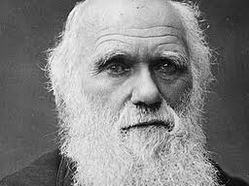
In the struggle for survival, the fittest win out at the expense of their rivals because they succeed in adapting themselves best to their environment.
-Charles Darwin
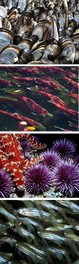
Environmental Physiology...
- The Evans Lab at California State University East Bay is interested in determining how shifts in abiotic variables affect the performance of aquatic organisms, particularly within the scope of global climate change.
- Environmental factors we have studied to date include increased temperature, fluctuating salinity and and decreases in ocean pH
- Projects have involved a variety of study organisms living in a range of habitats that include intertidal mussels, estuarine oysters, larval sea urchins, and fish.
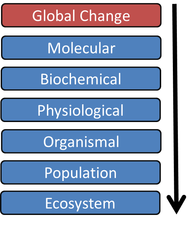
An Integrative Approach....
- Our work is integrative and comparative in nature, striving to characterize responses to the environment across levels of biological organization and elucidate differences that exist between populations or species in their capacity to respond to environmental change.
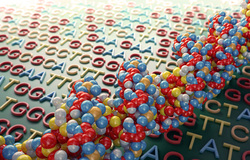
An emphasis on genomics...
- Most recently research has focused on the use of genomic approaches that better link molecular level responses to the environment to larger-scale physiological and organismal outcomes.
- Ultimately, this information is useful in developing predictions as to how organisms will fare in future environments.
